Have you observed a new idealism in foreign policy? If so, is it really new?

"In the Czech case, there was much idealism in the foreign policy of Václav Havel, our first president after the Velvet Revolution of 1989. This idealism arose all over Central and Eastern Europe as we liberated ourselves from totalitarianism and stepped onto the path to democracy. When I started working for the Office of the President, under Havel, the universality of human rights, the right to democracy and self-determination, and the protection of civilians were genuine objectives that were set out and pursued in foreign policy strategies. Ditto during the years I worked at the Ministry of Foreign Affairs.

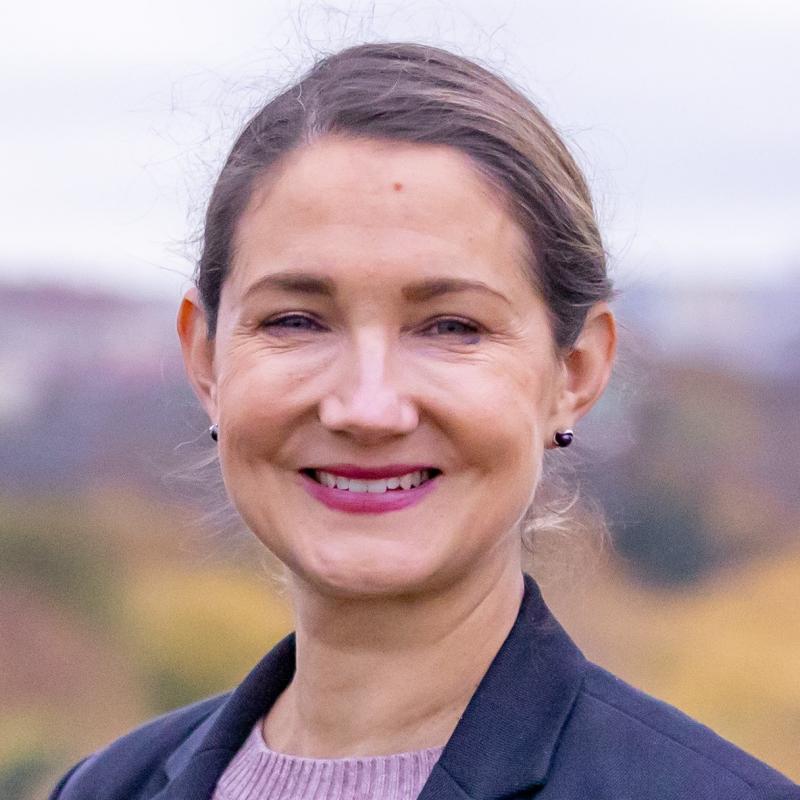
Gabriela Svárovská
Gabriela Svárovská

I remember that, at the time, there was a debate within the European Union on lifting the sanctions imposed on China because of the 1989 Tiananmen Square massacre. Czechia, an EU member by then, wanted the sanctions to be maintained. Even though we were often criticised by more experienced member states for being 'unrealistic', we stood up for the idealist approach.

At EU meetings, when Czechs or Poles took the floor, some of those present would just stop listening, for lack of trust or interest. But then came the first Czech EU presidency, in 2009, which gave us some agenda-setting power in the Council of Ministers. We raised the issue of human rights in Russia and elsewhere. We regularly invited human rights defenders to provide first-hand testimonies during Council meetings. We started implementing the EU Guidelines on Human Rights Defenders – practical measures to support and protect them. We also pushed through the Civil Society Forum as part of the EU’s Eastern Partnership agenda. Finally, our voice was being heard and listened to.

Today, Czech politicians still like to speak of Havel’s legacy, but they no longer adhere to its principles. At most, they pay lip service to them in their media statements. Other, stronger influences have come into play, not least private business interests and populist voices claiming to challenge the establishment, often equated with 'Brussels' and its climate policies. Little remains of the idealism that once characterised Czech foreign policy.

After Russia’s full-scale invasion of Ukraine in 2022, the Czech government came out strongly in support of Ukraine, but this was largely motivated by society’s response to the invasion. The first government press conferences were rather lukewarm. This changed after Czechs spontaneously took to the streets in solidarity with Ukraine and started helping Ukrainian refugees. The system started moving largely thanks to bottom-up pressure. It was a narrow political calculation.

The Czech government's 2024 initiative to procure ammunition for Ukraine was important, because every artillery shell counts at the front. However, in my opinion, the initiative was poorly organised. The government’s first step was to announce it – for PR purposes, one might say. Only then did it begin to raise money – from other governments in order to avoid putting its own money into it. Predictably, as soon as the buying spree was announced, ammo prices went up. The government’s grandstanding turned out to be not such a smart move after all.

We must also ask ourselves whether, prior to 2022, we were sufficiently vigilant in relation to the Russian threat. Were we really doing our homework, in Czechia and Europe, in terms of building societal resilience against disinformation and cyberattacks or reducing fossil fuel dependency? I don’t think we were. After Russia's annexation of Crimea in 2014, who spoke out against Europe's dependence on Russian energy? It was the European Greens, one of a few lone voices. Who, in 2019, imposed sanctions on firms that helped Russia build another gas pipeline, Nord Stream 2? It was Donald Trump – a very uncomfortable fact. Of course he was pursuing US strategic interests. It is a shame that Europe was unable to see, define, and pursue its own.

“ Let us call those who skilfully convert economic power into political power what they are: oligarchs ”

The reason I welcome the concept of 'neo-idealism' is precisely because I see so little of it in current Czech politics. It confronts us with the gap between our words and our deeds. This applies not only to foreign policy, of course, but to politics in general. It is one of the reasons for the crisis of democracy spreading across the West. Elites – and politicians in particular – like to talk about 'ordinary people', yet these are no longer their primary concern. Corporate sponsors, marketing advisors, and other influential players come first. Their meddling in decision-making amounts to the privatisation of political power. Let us call those who skilfully convert economic power into political power what they are: oligarchs. Czechia scored highly on the crony-capitalism index drawn up by The Economist in 2023. It came in second place after Russia."

What can Europeans learn from each other?

"We need each other to be able to better understand the various security threats Europe is facing. Countries such as the Baltic states, Poland, and Czechia, being former satellite states of the Soviet Union, see the threat from Russia and consider it a priority. But have they ever really cared about the Mediterranean aspect of European security? Did they listen to Spain, Italy, and others when they talked about the problems in their region? By this, I don’t mean that we should support efforts to stop boats carrying poor migrants across the Mediterranean Sea. It’s about developing the Southern dimension of the EU’s neighbourhood policy.

The divergence in security threat perceptions is not an issue of double standards per se, rather just a lack of information. We have Ukrainians, Belarusians, and Armenians living in Prague, while other countries have people from North Africa, the Middle East, and other regions. That’s why it’s so crucial to listen to each other, share expertise and intelligence, and foster connections between our civil societies.

That said, I do think that Russia is the biggest threat at the moment. While its military capabilities may be declining due to massive losses on the front line in terms of both personnel and equipment, it remains a dangerous enemy for a Europe that is witnessing the erosion of the Pax Americana. For decades, we happily relied on NATO, financed in large part by the United States. We lived peacefully under the US nuclear umbrella and with the presence of US troops in Europe. We now have to face up to a new reality. We must become more self-reliant in the area of defence, while keeping in mind that security and resilience are much broader than just defence.

“ We fail to implement sanctions properly ”

Weapons cannot guarantee security in Europe if political cohesion continues to be lacking. Without it, how can our armed forces act together? How do we decide on their deployment? Today, we are struggling to even agree on the milder instrument of sanctions. We fail to implement them properly. Friends of Putin are benefitting from the war on our continent, and we are letting them off the hook. We still allow companies that are part of the Russian military complex to operate in the EU.

In Czechia, we host a branch of Rosatom, Russia’s nuclear energy company. There may be other companies that are owned by Russian oligarchs, and they might even be sponsoring political parties, but we simply do not know. What we do know though is that they are sponsoring disinformation campaigns, malign influence operations, and cyber attacks. Russia’s footprint could be spotted in anti-vax campaigns, climate change denial, conspiracy theories about the war in Ukraine, and anti-gender movements. We are unable to get rid of the presence of Putin's regime on our territory, whereas that should have been the most straightforward part of our commitment to support Ukraine and protect Europe’s security.

It is too easy to place the blame solely on holdouts such as Hungary and Slovakia for Europe’s lack of political decisiveness. Other countries are hiding behind them to protect partisan interests of their own or cater to the most efficient lobbies."

How should Europe position itself towards the Global South?

"In Czechia, there is little reflection on Europe’s colonial past. When the director of the National Gallery started to talk about the decolonisation concept in arts, she was ridiculed by politicians. Didn't she know that our country never had any colonies? But we cannot ignore the fact that we have joined a club, the EU, that does include former colonial powers. In these countries, colonialism and the way it carries over into present-day relations with the Global South is discussed in public debate, by civil society, even by politicians.

It is also in our interest for Europe to make things right with the Global South. In today’s fragmenting world, we need more allies – also in the South. Today, big corporations from Europe and elsewhere are benefiting from slave labour, deforestation, land grabbing, and mining in these countries. Instead of continued exploitation, we should be offering them partnerships that, when it comes to trade and investment, observe the rights of their populations, including Indigenous peoples, and give them a say, for example in who is allowed to mine minerals on their territory and under what terms."

Should Europe still strive to promote democracy worldwide?

"In 2009, in close cooperation with the Swedish EU presidency, we pushed through Council conclusions on democracy support, making this a key objective of the EU’s external policies. The preparatory work was a landmark effort, bringing together experts on human rights and on development. These goals are closely linked (if sometimes conflictual), yet these people had never actually sat down together.

Part of this effort was a discussion on whether to speak of 'democracy promotion'. To avoid giving the impression of imposing our Western ways on other parts of the world, we agreed to use the term 'democracy support' instead. I still think supporting democracy, with the involvement of civil society, is very different to colonialism. Of course, we have to recognise that different cultures and regions have their own models of public participation in government. But we must also keep our distance from those who say that democracy is only suitable for Western societies, and that other societies are not capable of it. That boils down to cultural racism.


“ You know a democratic country when you see one ”

Democracy may have different operating modes, different institutions. But you know a democratic country when you see one.

Soft power is an important foreign policy instrument for Europe. To many human rights defenders around the world, Europe remains a model. It has played a leading role in bringing about important international treaties and UN resolutions. Again, when we work in support of human rights protection, it should not be about copying our model, but about participation and cooperation. Context matters."

And what about the international rule of law?

"Standing up for international law is not easy. It forces us to be critical of long-standing allies, such as Israel and the US. But if ever there was a time to think deeply about why international law exists, why it is vital to our security, it is now. Czechia is among the countries that should understand that any time in history, when the international order started to crumble, it was a bad time for the country."

In this context, which values should Green parties aim to project in society and politics?

"As Greens, we are quite clear and confident in stating what needs to be done. We must combine care for the environment and the climate with proper social policies, while observing human rights. These are the three core values we stand for.

The difficulty is how to make ourselves heard amid a backlash that pushes everything green and social out of the public debate. Should we shy away from anything that may be perceived and portrayed as radicalism in order to avoid being marginalised? Should we be less vocal on certain issues to ensure we remain in the mainstream and keep attracting media coverage? Or should we just decide to say things as they are? This is a major strategic question for all European Greens.

The pendulum will swing back in the end, if only because Europe, including Czechia, will ultimately reap the benefits of climate policies, the more so if they are combined with a fairer distribution of wealth and a transformation of the current extractive economic model into a sustainable one, kinder to both the environment and people’s wellbeing. Meanwhile, it is essential that Green, progressive, and left-liberal parties and groups, as well as social movements, work together."

BIO

Gabriela Svárovská has been an MP for the Czech Greens (Zelení) since November 2025. She was elected from 12th place of the Pirate Party list thanks to preferential votes. Gabriela is also the co-chair of the Czech Greens. She is a former civil servant, diplomat, journalist, and activist.

This interview was conducted prior to Gabriela’s election to the Czech parliament in October 2025.

logo Green European Foundation

The Green European Foundation's project New Idealism for a Disrupted Europe explores what we can learn from Central and Eastern Europe when it comes to defending values such as democracy, human rights, and the international rule of law. This project is carried out by Wetenschappelijk Bureau GroenLinks (NL), VONA (BE), Association for International Affairs (CZ), and Degrowth Estonia. It benefits from the financial support of the European Parliament to the Green European Foundation.

If you want to be informed about the project, subscribe to the newsletter of the Green European Foundation. 📬