Could you tell us something about your organisations and how they contribute to Estonia’s defence?

Ilmar Tamm: "The purpose of the Estonian Defence League (Kaitseliit) is to enhance Estonia’s readiness to defend its independence and constitutional order by means of voluntary citizen action. Our mission is enshrined in law, and we are overseen by the Ministry of Defence. We have weapons and take part in military exercises. We also have a role in civil crisis management, including tackling wildfires and providing assistance to the police.

The Defence League has around 18,000 members, of which over 1,500 are women. They are grouped into 15 regional branches, plus a separate cyber defence unit. We also have three affiliate organisations: the Women’s Voluntary Defence Organisation (WVDO) and separate youth organisations for boys and girls. With these sub-structures included, we have over 30,000 members – roughly 2.2 per cent of the Estonian population."

Airi Tooming
Airi Tooming

Airi Tooming: "The aim of the WVDO (Naiskodukaitse) is to develop crisis preparedness among both our 4,000 members and the wider population. We offer our members basic medical, civil safety, field catering, and military training and also provide training to non-members. 

Our organisation offers an opportunity to women who don’t want to be actively involved in combat to contribute to national defence, for instance in a supportive role to the ground forces. That’s why the training we offer also covers evacuation and other forms of civil protection. 

Providing support to the armed forces allows our members to familiarise themselves with national defence. Some of them – including women who initially didn’t want to pick up a weapon – eventually decide to join the Defence League’s combat units. Without the WVDO, they would likely have remained entirely unfamiliar with the military."

How much impact do your organisations have on society at large?

Ilmar Tamm: "Our Tallinn section is the largest in terms of membership, but we have a greater impact in smaller places. There, voluntary organisations play an important role in community building. They foster social cohesion through joint activities that also involve non-members."

Airi Tooming: "The number of people we reach with our trainings is many times greater than that of our membership. One of the training programmes we offer to non-members was developed by the Estonian Rescue Services Agency, which is responsible for national non-medical emergency services including the fire service. It includes general information on dealing with crisis situations, stockpiling, sheltering, and evacuation. At WVDO, we also teach additional topics such as lifesaving first aid, as well as skills that go beyond crisis preparedness including wildlife management, cyber hygiene, and recognising disinformation. We organise monthly evening lectures on various topics that are attended by hundreds of people.

In addition, we address mental health issues and psychosocial assistance in times of crisis. We train our members to share the basic skills they learn – on mental resilience in crisis situations and how to support others – within the wider community.

In 2024, we trained almost 30,000 people in crisis preparedness. Of these, around 18,000 participated in dedicated trainings, while the rest learned specific skills from us during larger public events.

Due to logistical and resource challenges, it’s impossible for us to reach the whole of the Estonian population using this approach. We realised that we needed a self-learning tool that is accessible and easy to use. That’s why we developed the Be prepared! (Ole valmis!) mobile app. The app provides instructions on a broad range of issues, from first aid for toddlers and protection against cyber threats to what to do in the event of armed conflict. It covers every scenario that our team at WVDO has been able to think of.

Ilmar Tamm
Ilmar Tamm

To date, the app has been downloaded by an estimated 140,000 people, of which 70,000 are active users. In May 2025, on the day the emergency alert system was tested, the app was opened on around 30,000 different devices."

Ilmar Tamm: "Crisis preparedness, whether through apps or other means, cannot be forced upon people. This provokes resistance. However, we are looking into the possibility of having Be prepared! pre-installed on every smart device purchased in Estonia. Ukraine, which sends air raid alerts via a number of similar apps, could serve as an example here.

Of course, technology may be a challenge for the older generation. But young people could help their grandparents, which would improve both preparedness and social cohesion. They would feel that their knowledge and skills, which at first glance may seem insignificant compared to the life experience of their elders, are both valuable and valued."

Estonia recognises that a prolonged crisis might require the evacuation of the country. Would your volunteers have a role to play in this?

Airi Tooming: "The Estonian Rescue Services Agency is responsible for large-scale evacuations. On the ground, these operations are carried out by local authorities together with partner organisations, including the WVDO. We participate in joint exercises. Our specific responsibility is the management of evacuation sites."

Ilmar Tamm: "Last year, 800 people were evacuated as part of an exercise in South Estonia. The local municipality was responsible for organising transport, while the WVDO prepared the arrival points. The evacuees were placed in different locations provided by the Rescue Services Agency. Exercises like these offer valuable lessons; they enable plans to be fine-tuned."

Airi Tooming: "In the event of an evacuation, the authorities will not need to move all the people. The assumption is that most of them will leave on their own. What is needed here is an effective notification system that allows people to act quickly."

Ilmar Tamm: "Strategic communication is equally important. You want to prevent a mass panic."

Does participation in the Defence League and the WVDO affect people’s values and their attitudes towards state institutions?

Airi Tooming: "The Estonian Ministry of Defence conducted a survey that gauged, among other things, respondents’ willingness to actively defend their country. Whereas average willingness is around 65 per cent, among members of the WVDO, it is over 90 per cent. A sense of patriotism is also significantly higher among our members, by dozens of percentage points.

Do people join our organisations because of their higher-than-average willingness to defend Estonia, or is this conviction fostered by participation in our activities? It’s impossible to say. I think it works both ways. What we can say is that participating in voluntary organisations like ours certainly doesn’t diminish people’s willingness to protect their country."

What motivates your members to voluntarily spend weekends in the woods doing training exercises?

Airi Tooming: "According to the study, it's mainly about self-fulfilment, contributing to national defence, having a sense of belonging, and developing individual skills. This all adds up to a holistic picture in which a person feels safe, they feel good about themselves, they develop their capabilities, and they become part of a team – while doing something useful from a defence perspective."

Ilmar Tamm: "Neither the Defence League nor the WVDO engage in active recruitment campaigns, for instance via TV commercials. We rely on our members to do this. Those who are interested will find their way to our organisations. They generally feel driven to contribute to the collective good because their country is dear to them. As this sentiment can develop at any time in a person’s life, we have no upper age limit for joining. A reservist in the regular army is released from duty at the age of 61, but it is possible to join the Defence League at any age.

People don't sign up for the Defence League because they like the prime minister or the governing party, and they don't quit when the party they support is no longer in power. They join because of other values, and that is very important. The Defence League is not the place to discuss politics.

That said, geopolitics does play a role. The survey that Airi mentioned was carried out in 2023 to analyse the jump in membership after Russia’s full-scale invasion of Ukraine the year before. This surge was not a sign of social panic but rather a very conscious decision by many people to express their willingness to defend the country. At present, we welcome between 600 and 800 new volunteers per year."

“ In times of crisis, people want to be of service to others rather than depend on their assistance ”
Airi Tooming

Airi Tooming: "The catchphrase for those who joined in 2022 was, 'I want to be a helper, not a needer.' In times of crisis, people want to be of service to others rather than depend on their assistance."

Ilmar Tamm: "One advantage of the Defence League over the military reserve force is that our volunteers can choose their own unit. This fosters self-initiative and experimentation. In some cases, the regular armed forces also benefit from that.

A good example is the development of drones. On the Ukrainian battlefield, drone technology is advancing at a rapid pace. This is a challenge for the army’s formal structures. If they define a particular drone capability today, it may be obsolete in six months. The solution to this is continuous experimentation – and this is where the Defence League comes in. We have volunteer UAV fanatics doing innovative things in small groups. Some buy drone equipment, often with their own money or donations, while others travel to Ukraine to test it. On their return, they give feedback on the drones’ operation, which is used to make improvements. 

Last May, an experimental drone unit of the Defence League even took part in a major Estonian military exercise – Exercise Hedgehog – together with Ukrainian and other foreign troops. None of this would have been possible ten years ago. Back then, it was common for military equipment to be put into service with a delay of several years. Nowadays, our armed forces are much more responsive and flexible, thanks in large part to volunteers.

“ Our contribution to society goes beyond military preparedness ”
Ilmar Tamm

I want to stress that our contribution to society goes beyond military preparedness. For instance, during the weekend in early 2025 when all three Baltic states switched from the Russian power grid to the EU system, we assisted in guarding electricity infrastructure objects that were vulnerable to sabotage. The fact that we do not limit ourselves to military activities but have a wider role in protecting society resonates with our members."

Defence is a common asset for all of us, regardless of sex or gender. Why maintain the distinction between a largely male Defence League and an all-female WVDO?

Airi Tooming: "Let me stress that men and women have an equal opportunity to join the Defence League, including the combat units. But we cannot ignore the fact that military service is still compulsory for men only; for women, it’s voluntary. Therefore, far fewer women than men receive military training. The WVDO is a unique tool for involving women more effectively in national defence. If we didn’t have this specific format for women, they would be even more distanced from the armed forces. It would be harder for them to make a contribution.

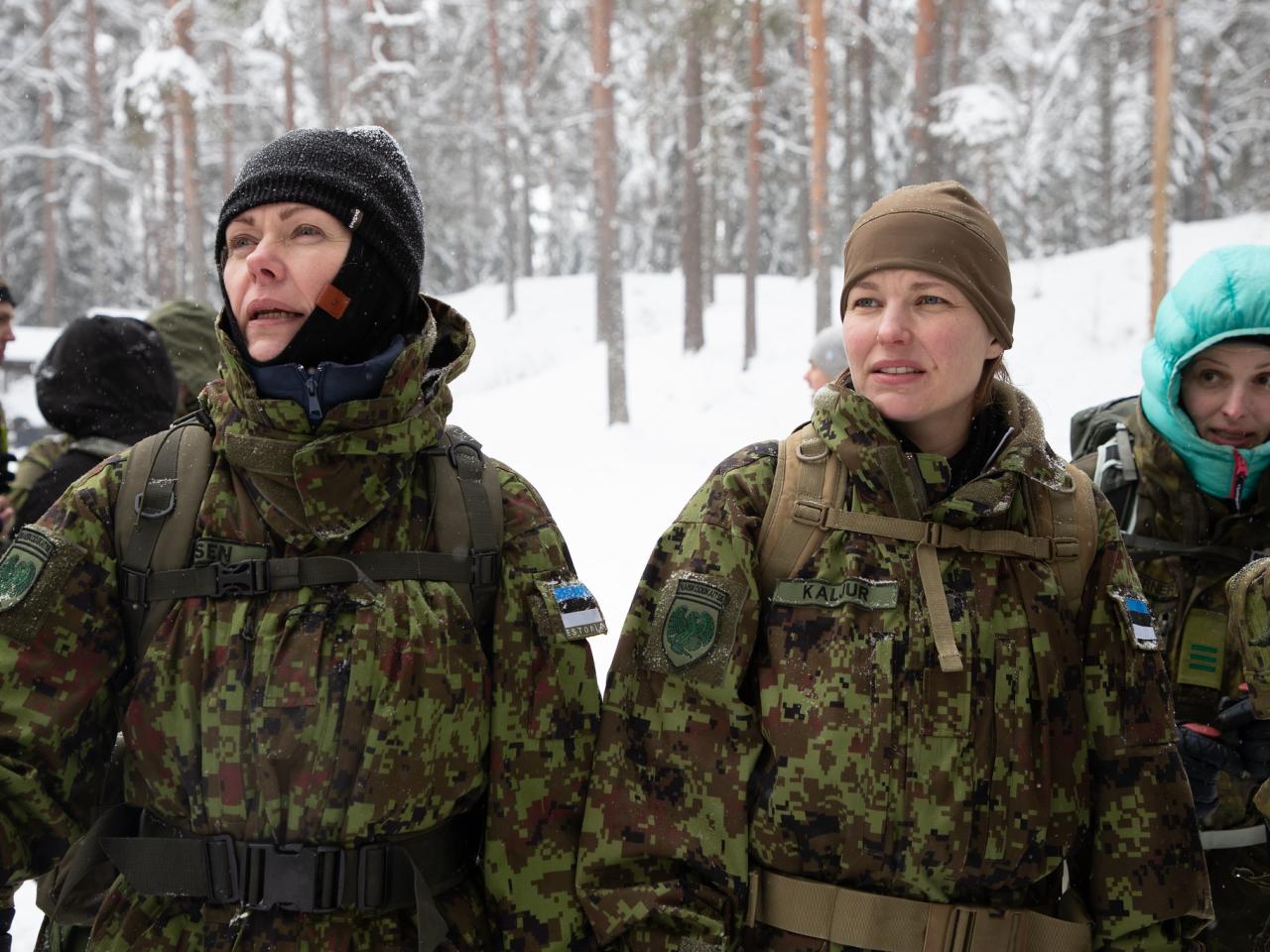
Members of Estonia's Naiskodukaitse (Women's Voluntary Defence Organisation) during a winter patrol competition
Members of the Women's Voluntary Defence Organisation during a winter patrol competition. Photo by Kaitseliit, 2023. CC BY 2.0

Our youth organisations introduce their members to the various military service pathways, with a special focus on options for girls. The skills that young people acquire within these organisations, from hiking to basic survival, have military relevance. 

Moreover, the activities of the WVDO are contributing to the normalisation of women in defence. Its members know how to shoot a gun, follow military skills courses, and take part in military exercises. Many of them are mothers and therefore role models for their children. I would argue that these children grow up with a very different understanding of gender roles than previous generations. As society evolves, we will probably reach a point one day when it is considered natural for men and women to make a more equal contribution to defence."

Ilmar Tamm: "I think our school system should start teaching young people about defence earlier on, from the age of 12 or 13. They need to develop an understanding of what national defence is and what its components are. To avoid encouraging militarism, children should be taught civics at an even earlier age: how to become a good citizen, and what it means to have a say in decision making."

The Defence League’s youth organisations are also open to non-citizens. Does that help to protect young people belonging to the Russian-speaking minority from Moscow’s propaganda?

Ilmar Tamm: "We made that change in 2015 because we didn't want to exclude the young people who are in another information space. We wanted to involve them and introduce them to our activities. If you push them into the Russian information space now, in ten years' time, it will be basically impossible to integrate them into Estonian society.

In Narva, a town with a majority of Russian speakers, only a handful of young people were interested in national defence at first. Today, there are several hundred. They are motivated not so much by patriotism as by other passions, including the desire to have a community of friends to socialise with. We don’t push them to communicate in Estonian. They generally speak Russian, but they have found a way to reconcile this with the values of our youth organisations."

How can civilians who are not part of the Defence League or the WVDO get involved in national defence, especially in the event of war?

Airi Tooming: "We are aware that, if any kind of crisis escalates, we are likely to have people lining up at our door who want to help. We’re currently working on a system to quickly direct them to places where they can be of assistance – not only to us, but also to our partner organisations."

Ilmar Tamm: "Our members receive training in the basics of non-violent resistance. We are now adapting this course and the accompanying training materials for young people, so they can learn how to undermine an occupying force without putting themselves in danger. Ideally, this would be part of school curricula.

Wider society needs to understand that resistance isn’t simply a matter for the armed forces, hiding out in the woods and carrying out attacks on the invaders. Society can resist in different ways; not everyone needs combat skills."

BIOS

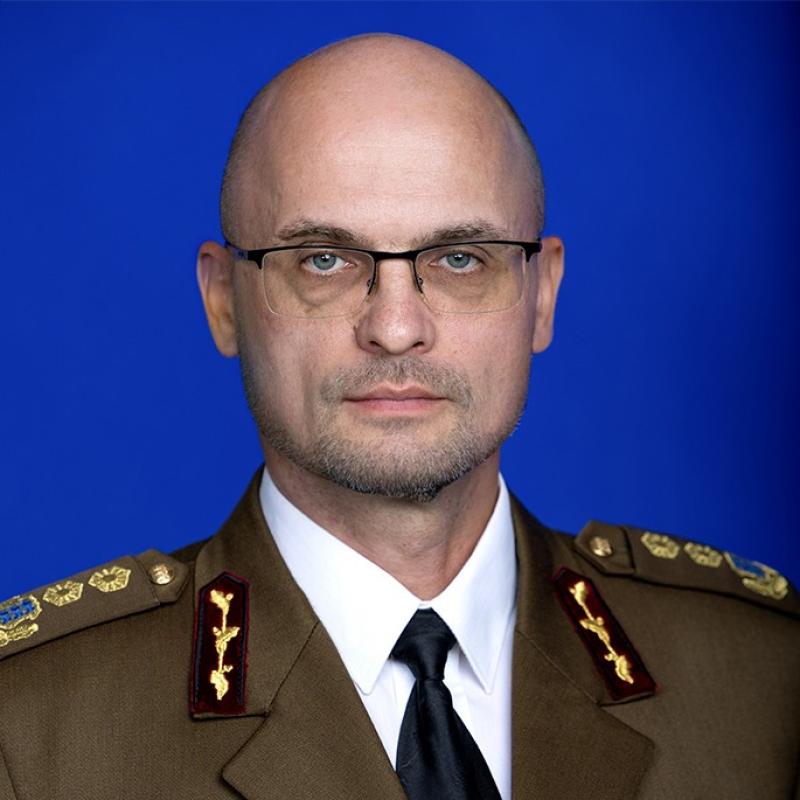
Major General Ilmar Tamm is the commander of the Estonian Defence League (Kaitseliit). Tamm joined the Estonian military in March 1992, shortly after the country regained its independence. He has since held a wide range of leadership and staff positions in Estonia and abroad, including within NATO. He played a key role in Estonia’s accession to NATO and was one of the initiators of the alliance’s Cooperative Cyber Defence Centre of Excellence in Tallinn.

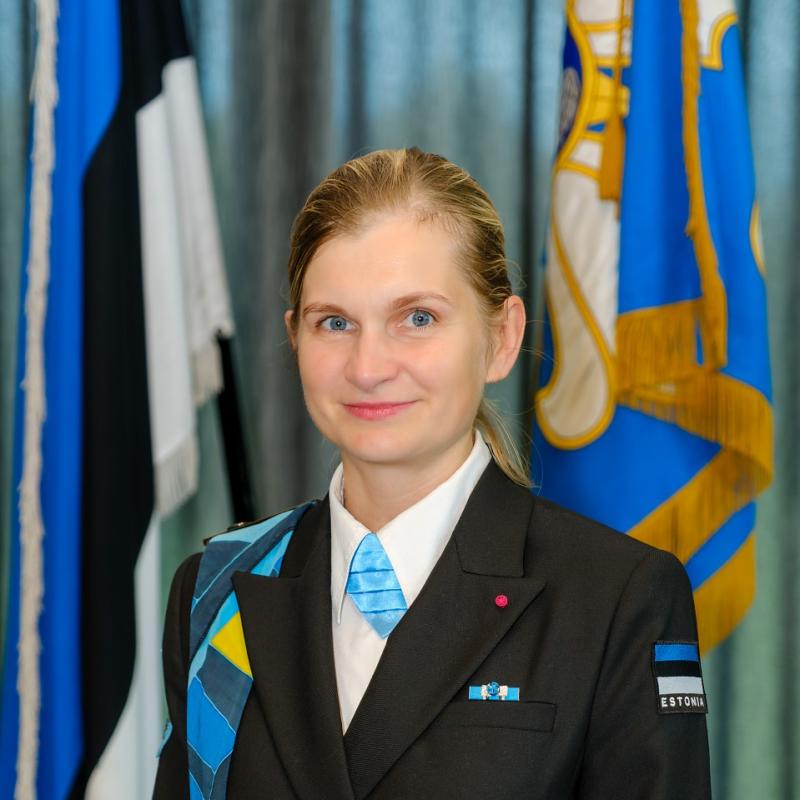
Airi Tooming is the chair of Estonia’s Women's Voluntary Defence Organisation (Naiskodukaitse). Airi holds a master’s degree in organisational behaviour and a bachelor’s in semiotics and culturology. She joined the WVDO in 2000, subsequently rising through the ranks to become its head in 2006.

logo Green European Foundation

The Green European Foundation's project New Idealism for a Disrupted Europe explores what we can learn from Central and Eastern Europe when it comes to defending values such as democracy, human rights, and the international rule of law. This project is carried out by Wetenschappelijk Bureau GroenLinks (NL), VONA (BE), Association for International Affairs (CZ), and Degrowth Estonia. It benefits from the financial support of the European Parliament to the Green European Foundation.

If you want to be informed about the project, subscribe to the newsletter of the Green European Foundation. 📬

Reactie toevoegen