Russia’s full-scale invasion of Ukraine in February 2022 came as a surprise to many in Western Europe, myself included. But we had been warned. Politicians and analysts in Central and Eastern Europe had been sounding the alarm[1] for years: on the resurgence of Russian imperialism, on Vladimir Putin's dream of restoring the Russian Empire, and on his determination to demolish the whole edifice of rules and institutions built to ensure peace in Europe in favour of a Russian-dominated “Eurasia”. We should have taken better note of our eastern allies’ warnings.

Central and Eastern European governments were also the first to supply arms to the Ukrainian military. Even today, in proportion to their GDP, the Baltic countries, Finland, and Poland are among the largest donors to Ukraine in its struggle to survive as an independent and democratic country.[2]

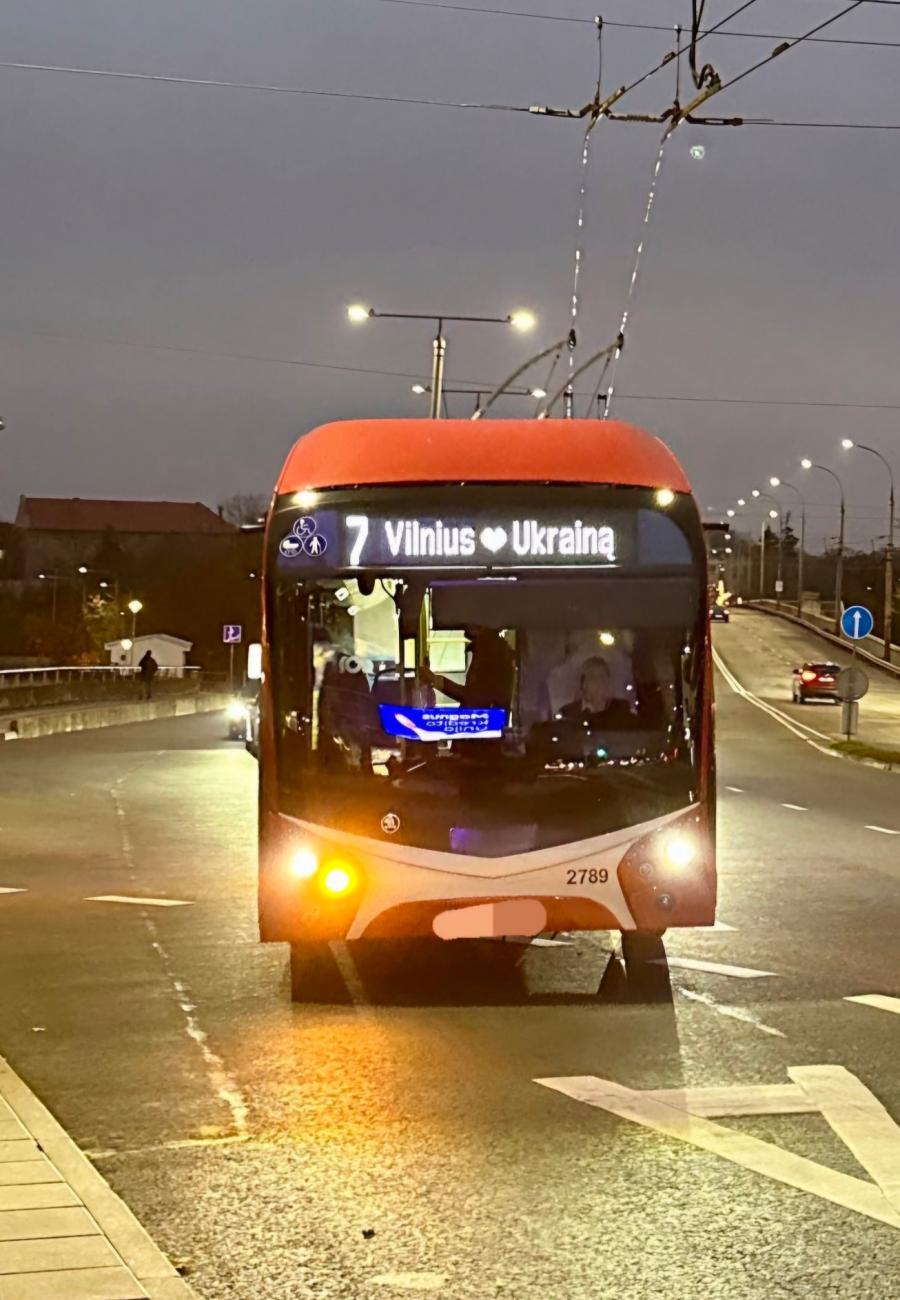
trolleybus Vilnius loves Ukraine
Trolleybus in Vilnius, Lithuania. Photo: Ivan Koutzaroff, 2024.

For more than three decades, since the fall of the Berlin Wall, we Western Europeans have been lecturing our Central and Eastern European neighbours on what they should do to become – and remain – responsible members of NATO and the European Union. It is time to reverse the perspective: what can we learn from them?

This is not to suggest that we heed the advice of Viktor Orbán and other Putin cronies but rather of individuals such as Kaja Kallas, the former prime minister of Estonia who is now the EU’s foreign policy chief. She is one of the Central and Eastern European leaders who weave their staunch support for Ukraine into a broader narrative on defending democracy, human rights, and the international rule of law – and on the sacrifices we must make to do so. They emphasise that if we give Putin his way in Ukraine, peace will not break out. We should then brace ourselves for new wars of conquest, both by the Putin regime and by autocrats elsewhere who feel emboldened by democratic states’ unwillingness to defend each other and the rules-based order.

Politicians like Kallas are sometimes referred to as champions of a “new idealism” in geopolitics. The term was coined by security expert Benjamin Tallis in 2022. Under his definition, neo-idealism is a “morally-based approach to geopolitics, grounded in the power of values conceived as ideals to strive for: human rights and fundamental freedoms, social and cultural liberalism, democratic governance; self-determination for democratic societies; and perhaps most importantly, the right of citizens in those societies to a hopeful future”.[3][4]

Moral bankruptcy

Neo-idealism stands in contrast to realism, a widely branched tradition in international relations theory that focuses on competition between great powers. To maintain or increase their might, these powers pursue spheres of influence. If a smaller country happens to be in such a sphere of influence, it has bad luck. Then it is no more than a pawn in the chess game between great powers. A satellite state of one great power, or a buffer state between two. The desires of their citizens become irrelevant. Realists often quote Athenian historian Thucydides: “The strong do what they can and the weak suffer what they must.”[5] 

When this maxim becomes policy, whole nations are denied the right to democratically choose their future – or their allies. Leading realist John Mearsheimer, for example, blames the US and its European allies for the Russian invasions of Ukraine in 2014 and 2022.[6] He argues that the West should not have pushed for Ukrainian membership of NATO and advocates making Ukraine a “neutral country”.[7] The fact that Ukraine itself wants to join NATO carries no weight for him.

This realist frame of thought overlooks not only the aspirations but also the agency of smaller countries. Estonian professor of international relations Maria Mälksoo points out that Ukraine isn’t meekly suffering its fate. Quite the opposite: it has surprised the world with its tough resistance against the aggressor.[8] Central and Eastern European countries within NATO and the EU have also proved that they are not clueless pawns. By taking the lead in supporting Ukraine, they have built up moral authority – to which Kallas owes her appointment as EU foreign policy chief.

The way Russia is waging the war in Ukraine is difficult to explain from a realist perspective. If Putin’s goal is to turn Ukraine into a buffer state, why is his war so genocidal?[9] According to Ukrainian researcher Kseniya Oksamytna, the Ukrainian government realised soon after the invasion that it was not about neutrality.[10] She points to the town of Bucha. The massacre that the Russian army committed there in March 2022 also involved the systematic rape of girls and women. “Russian soldiers told them they would rape them to the point where they wouldn't want sexual contact with any man, to prevent them from having Ukrainian children,” the BBC reported.[11] Faced with a murderous great power seeking to erase its identity in the name of a “superior” culture, Ukraine is understandably unwilling to be a lone buffer state and has actively sought the protection of allies.

“ How moral it is to ask another state to serve as one's buffer zone? ”

Great power realism boils down to “might is right”. Mälksoo calls on her realist colleagues “to probe the moral weight of asking another state to serve as one’s buffer zone”.[12] The foreign ministers of seven Central and Eastern European countries have warned that “spheres of influence never bring peace and stability. They bring oppression.”[13] For Tallis, Mearsheimer’s realism amounts to “moral bankruptcy”.[14]

Trump's imperialism

Realism is influential in Western capitals. The awe of great powers partly explains why many Western European governments and the Biden administration remained impervious to the calls of Kallas and other neo-idealists to help Ukraine not just survive but win. Under Joe Biden, support for Ukraine’s war effort was “always a day late and a dollar short”, writes American neo-idealist Alexander Vindman.[15] The same applies to European aid.

With Donald Trump back in the White House, we are witnessing great power realism on overdrive. On Russia’s war on Ukraine, Trump sides with the aggressor: he blames not Moscow but Kyiv for the war. After all, the weak must endure rather than resist. He has all but halted American support for Ukraine. Moreover, Trump is extorting Kyiv to cede land to Russia and natural resources to the US, is hesitant on providing security guarantees, and is blocking Ukraine’s accession to NATO. A “peace deal” on such terms would be a prelude to future Russian aggression. It would also risk destabilising Ukraine’s fledgling democracy.

Trump has already dealt several severe blows to the international rule of law, notably with his gunboat intervention in Venezuela – replacing one corrupt autocrat with another – and his territorial claims on Greenland, the Panama Canal, and Canada. He sees the entire Western Hemisphere as the United States’ backyard, where it is free to subjugate other countries and plunder their natural resources. “The outsized influence of larger, richer, and stronger nations is a timeless truth of international relations,” states the new US National Security Strategy.[16] We are a long way from the United States that promoted self-determination and democracy, however inconsistently. This administration preaches lawlessness and coercion – courtesy of the pundits of great power realism.

Trump’s mobster imperialism might well embolden China’s autocrat Xi Jinping to seize Taiwan, killing off its pluralist democracy. For Putin, it is an encouragement to grab land beyond Ukraine. The Baltic states are right to feel threatened; Russian sabotage in the Baltic Sea and elsewhere has already brought NATO and the EU into a twilight zone between war and peace. To make matters worse, Washington is casting doubt on NATO's core pledge that an attack on one is an attack on all. Team Trump is doing the work for the war criminal in the Kremlin.

Time to push back

Trump’s disregard of international law and admiration for Putin, together with the rapid breakdown of US constitutional democracy, means that little to nothing remains of the transatlantic bond. The US under Trump is no longer an ally of Europe. This is a bitter pill to swallow, especially for Central and Eastern Europeans. For decades, NATO under US leadership was their insurance policy against Russia.

Some neo-idealists faced up to the transatlantic rupture early on. After Trump and his vice-president ambushed Ukrainian president Volodymyr Zelenskyy in the Oval Office in February 2025, Kallas concluded that the “the free world needs a new leader.”[17] For his part, Zelenskyy – the figurehead of neo-idealism, according to Tallis – has argued that it is time for a unified European military. “Europe has everything it takes. Europe just needs to come together and start acting in a way that no one can say ‘no’ to Europe, boss it around, or treat it like a pushover.”[18] These are the words that should be spoken by his European allies who are within the EU and NATO.

Instead, European leaders opted to flatter the White House autocrat, leaving Kallas and Zelenskyy no choice but to fall into line. Throughout 2025, leaders engaged in competitive self-humiliation. The eventual winner was NATO Secretary General Mark Rutte, for addressing Trump as “Daddy”. They often kept quiet about Trump’s orgy of cruelties, both abroad and at home. But all they got in return was more betrayal. Skewed trade deals that fail to stop US assaults on tech and sustainability regulation. Repeated threats to seize Greenland from Denmark by force. A US “peace plan” for Ukraine written by the Kremlin. A National Security Strategy that aims to divide and weaken the EU by helping the far right into power. If you lick the boots of a bully, don’t be surprised to get kicked in the face.

“ Submissiveness to Trump merely feeds his savagery ”

Submissiveness to Trump merely feeds his savagery. It makes European leaders appear spineless and weak, not least in the eyes of their own citizens. It is no surprise that trust in governments is in freefall. It is time to change tack – to push back against Trump, and to be seen to do so. Europe won’t gain respect from others unless it respects itself and stands firm on its own values.[19] 

At the same time, European allies should step up their military aid to Ukraine – ceasefire or not. The country’s survival depends more than ever on combining its willpower and ingenuity with Europe's economic power – all of which surpass Russia’s. Lasting peace is only possible if Ukraine has the upper hand.

The stronger its support for Ukraine, the more time Europe will have to strengthen the defence of its eastern borders. NATO’s defence spending targets should be maintained – not to please Trump but to safeguard ourselves against future Trumps. 3.5 per cent of GDP is a reasonable estimate of what it would cost to defend Europe conventionally without US assistance.[20] 

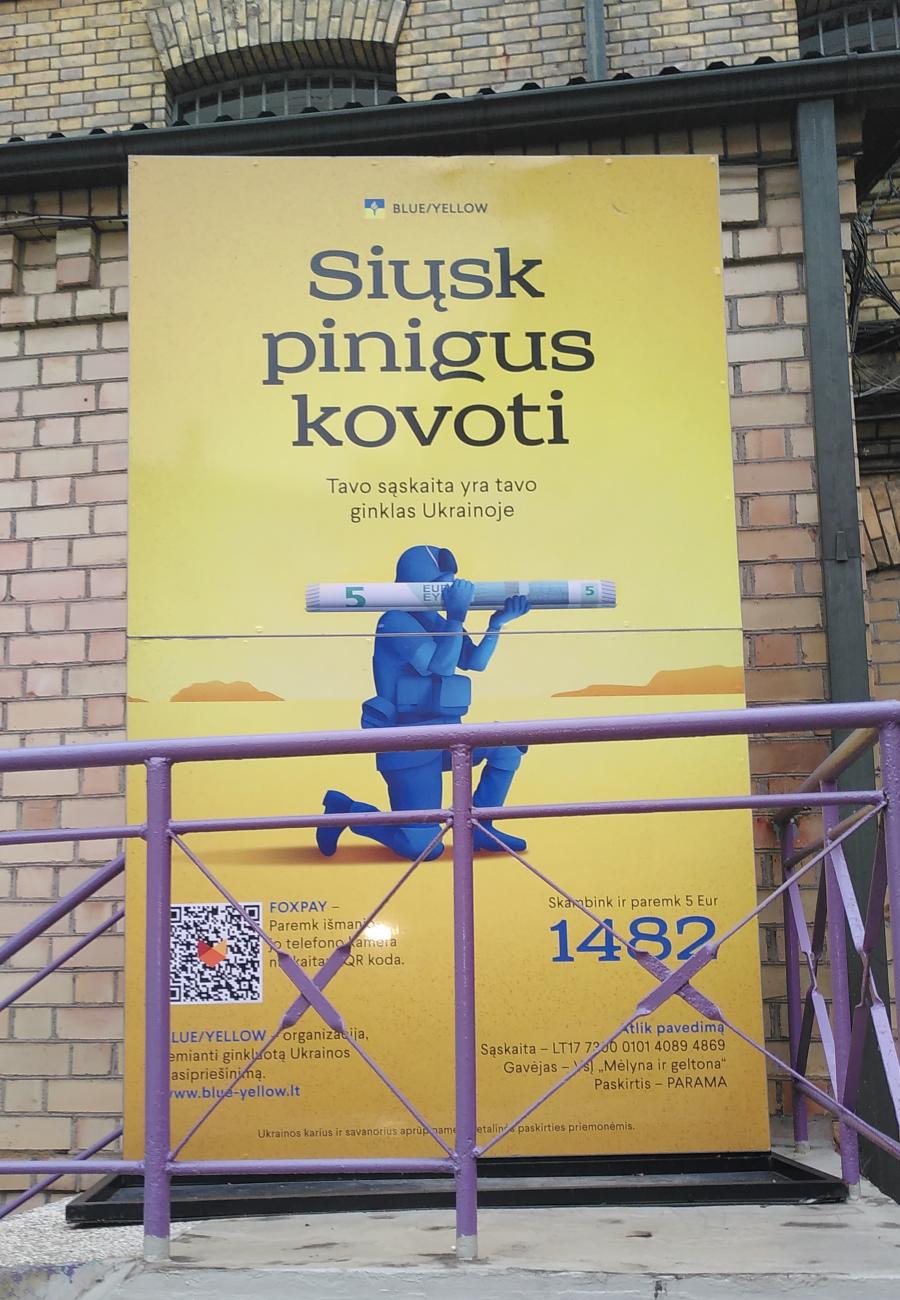
poster Vilnius - "Send money to fight" - oproep donaties voor Oekraïne
Poster in Vilnius: 'Send money to fight'. Photo: Richard Wouters, 2024.

In parallel, the EU should operationalise its mutual defence clause,[21] inviting the UK and Norway to participate. The battle-hardened troops of a free Ukraine on its way to EU membership would be a further welcome boost to European defence.

Europe must also start working on an independent nuclear deterrent, by extending the French and British capabilities into a European nuclear umbrella. Otherwise, we will remain vulnerable to nuclear blackmail by Putin.

To become less prone to coercion and manipulation, Europe needs to build strategic autonomy in other fields too, from digital technologies to critical raw materials. In many cases, cost will come before benefit. Gaining public support for military and economic defence – and for the sacrifices this will require – will succeed only if political leaders are candid about the grim era in which we find ourselves. The days of Pax Americana and the “peace dividend” are over. 

But leaders must also present the transformation required as the fulfilment of deeply entrenched values, connecting the past, present, and future. Self-determination, democracy, and the rule of law are values that many of our ancestors fought for, as do Ukrainians today, and that we share with others – in Europe and beyond. We draw on these values to imagine a better future; if they were battered and cast aside, we would dearly miss them – look at Russia, the occupied parts of Ukraine, China, and the US under Trump. Neo-idealism reminds us of the power of values.

Democracy vs autocracy

Over the past decade, the global state of democracy has been in decline.[22] The United States crossing over from the democratic to the autocratic camp, joining Russia and China, puts the model of constitutional democracy in a tight spot. Europe cannot reverse this trend on its own, especially in the context of threats from within by far-right parties that are also hostile to pluralist democracy. Europe needs allies and partners – and the additional resources and legitimacy they bring.

Some 35 traditional US allies – including the EU and most of its members, the UK, Canada, Japan, South Korea, and Australia – have come together as the Coalition of the Willing to provide support to Ukraine. Together with the Global South, they have maintained global efforts against the climate and biodiversity crises, pandemic threats, and tax evasion, despite sabotage by the Trump administration. But in other areas, such as trade and tech, they have failed to unite against the United States’ strong-arm tactics. Together, Europe and other Western democracies would be better able to resist Washington’s dictates and strike back against sanctions. 

“ The collusion of nativist, imperialist authoritarianism and tech libertarianism morphing into fascism is the greatest menace to democracy ”

This is most pressing in the digital realm, where the US administration, at the behest of Big Tech, is rallying against rules that aim to curb disinformation, harmful AI, data extortion, and market abuse. The collusion of nativist, imperialist authoritarianism and tech libertarianism morphing into fascism is the greatest menace to democracy, both inside and outside the US. What radio did for Hitler, social media is now doing for Trump and Musk. Europe and its allies need to urgently restore the integrity of their information ecosystems.

The pervasiveness of American tech also brings a larger security risk. The Ukrainian military experienced that first hand in late 2022, when Elon Musk cut off its access to his Starlink satellite internet system, impeding a counteroffensive. In 2025, by order of the Trump administration, magistrates at the International Criminal Court lost access to their email accounts, credit cards, and more. As Europe works to reduce its dependence on US technology, including arms, it could invite democratic allies to join this de-risking operation. The “EuroStack” – the various layers of technology that Europe needs for digital sovereignty – would become a “DemocracyStack”.

A club of democracies would stand stronger against Trump, Putin, Xi, and Big Tech if it had partners in the Global and Plural South. After all, that is where the world's largest (more or less) democratic countries are located, including India and Brazil. Their governments, however, are not keen to be drawn into a struggle between autocracy and democracy. Rather, they see the world through the lens of coloniser versus colonised, a distinction that persists in today’s inequalities.[23] To protect their sovereignty, they hedge their dependencies, doing business with Russia or China as easily as with the EU. Rapprochement will stand a better chance if Europe employs a narrative that focuses not only on democracy but also on the international rule of law.

Ukraine has already drawn that lesson. “Kyiv’s message has been that supporting Ukraine means to stand not by a ‘Western’ camp but by the UN Charter,” notes Polish-Mexican researcher Ivan Kłyszcz.[24] In his 2024 speech to the UN, Zelenskyy put the spotlight on Russia's violation of the right to self-determination and the prohibition of violence between states. “The world has already been through colonial wars and conspiracies of great powers at the expense of those who are smaller. Every country – including China, Brazil, European nations, African nations, Middle East – all understand why this must remain in the past.”[25] Since advances in diplomacy require long-term engagement, Ukraine has expanded its diplomatic presence in the Global South, positioning itself as a partner with shared historical experiences of oppression, external domination, and extractivism.[26]

To deepen partnerships with democratic countries in the South, Western democracies will have to rally behind their demand for a greater say in global institutions such as the UN Security Council, the IMF, and the World Bank. Saving these institutions from Trump's wrecking ball will, in any case, require broad coalitions. 

In opposition to the resource extractivism so brazenly pursued by Trump, the EU and its allies must promote a model of fair trade – one that assists countries willing to share their natural resources in moving up the value chain. Under this model, they would not simply dig up metal ores but also build batteries and more. “Friendshoring” would still meet the EU’s objective of diversifying supply chains away from China.

Furthermore, Europe should not fund extra defence spending at the expense of support for the world’s poorest. If we leave it to China to fill the gaps created by the United States’ withdrawal from humanitarian aid and development cooperation, global democracy will be in even deeper trouble.

“ Do the lives of Ukrainians matter more than those of Palestinians? ”

Last but not least, Europe must be careful to avoid double standards. The limp response of many European governments – including neo-idealists – to Israel's genocidal violence in Gaza has undermined their credibility in the South. Do the lives of Ukrainians matter more than those of Palestinians? This selective approach to international and humanitarian law makes it easier for Southern governments to look the other way from Russian imperialism and cosy up to Putin. European double standards, therefore, harm the country that lies at the heart of the neo-idealist project: Ukraine.

In a world facing not only geopolitical but also ecological crises, we cannot always avoid cooperating with autocracies. China, for example, is an indispensable partner in the fight against climate breakdown – especially now Trump has once again stepped out of the Paris Agreement. Paradoxically, in matters of ecology, working with systemic rivals may well help protect democracy. Climate analysts Byford Tsang and Juan Pablo Osornio point out that “runaway climate change is more likely than a stable climate to create the political conditions for authoritarians to thrive.”[27]

Neo-idealism can still offer guidance for our approach to autocracies in the Global South. It challenges us to look beyond governments. Even in countries ruled by dictators, there are many who yearn for democracy. How can we amplify their voices? And if it comes to a democratic breakthrough, how can we help democratic institutions take root?

Democracy promotion must be seen as part of security policy, especially since democracy offers the best chance for peace[28] and a sustainable future.[29] This insight should permeate the trade, development, and asylum policies of the EU and its member states. If we need to import green hydrogen or hydrogen-intensive intermediate goods from solar- and wind-rich countries to decarbonise European industry, should we choose to go into business with autocratic Saudi Arabia or democratic Namibia? Should we pay autocrats to block asylum seekers from reaching Europe when almost all refugee crises are caused by authoritarian regimes, or would we rather use those funds to support fragile democracies, human rights activists, and independent media?

Neo-idealism meets Green thinking

The above suggests that Greens and neo-idealists can learn from each other. Neo-idealism calls on Greens to toughen up. Green geopolitics has always championed a broad conception of security, including human and ecological security, which is more relevant than ever in today’s polycrisis. But a truly comprehensive security approach must be serious about state security too. Protecting the sovereignty of states, or the EU, requires military muscle. Greens should stress interlinkages between the different facets of security and be frank about trade-offs. Europe’s rearmament push, for example, has a considerable ecological footprint. This tension – a conflict of values – must be mitigated. Greens should endeavour to make the European defence sector the greenest in the world.

Neo-idealism, on the other hand, could benefit from Greens’ awareness of planetary boundaries and global injustices. However crucial the divide between democracies and autocracies may be, the need to prevent ecological collapse compels us to look beyond it. Additionally, in order to find democratic partners in the Global South, Europe should make a clean break with its colonial past and must refrain from lecturing. It should clearly set itself apart from Trump’s gunpoint extortion and demonstrate that, when compared to China, it is both more responsible and more reliable. Proving to the Global South that Europe is not just another aspiring superpower seeking to extend or reclaim its sphere of influence will take time and effort. Equal partnerships, involving a wide range of actors including civil society, offer the best chance of finding common ground among diverse world views.

Domestic politics may also provide fertile conditions for cross-pollination between neo-idealism and Green thinking. A crucial element of neo-idealism, according to Tallis, is the “right to a hopeful future”.[30] He insists that democracies must prove both their material and their moral superiority to win the systemic competition with autocracies. But is the promise of material progress still tenable in an era of ecological disruption? A growing number of climate and environmental scientists warn us that continued economic growth in rich countries cannot be reconciled with a liveable Earth.[31] If ecology retaliates so strongly that GDP growth grinds to a halt, democracy will be tested even more severely. Could a “hopeful future” also mean growing our wellbeing rather than our economy? And could this have geopolitical relevance?

Once basic material needs are met, our wellbeing depends more on the quality of relations with other people and living beings than on the consumption of goods and services. Wellbeing policies aim to reinforce the social tissue. Strengthening communities and fostering inclusiveness is not only an antidote to consumerism but also a booster for resilience. As such, it is equally relevant for geopolitics as it is for ecology. Crises can arise from ecosystem breakdown as well as from sabotage or outright war. In all cases, individual prepping will only get us so far. Ultimately, our survival depends on the solidarity of others.[32] As demonstrated by Ukraine, strong communities help sustain countries through prolonged war. As such, they may even form an aspect of deterrence. 

The power of values such as democracy, rightly highlighted by neo-idealists, is heavily reliant on the communities in which they are practised and nurtured. Citizens bonded together are able to mobilise when politicians stray too far. This is exactly what happened when Ukraine’s government and parliament stripped the country’s anti-corruption bodies of their independence in mid-2025, raising fears that the diversion of public funds from the war effort for private gain would go unpunished. To defend the rule of law, civil society organisations staged demonstrations in Kyiv and other cities. These protests, together with pressure from Ukraine’s allies, forced Zelenskyy and his party to make a U-turn and restore the graft-fighters' independence. It is not a great leap to imagine the Ukrainians who took to the streets in the midst of war to stand up for their values – and those who would have done so had they not been defending these same values on the front line – as the quintessential neo-idealists.

“ Strengthening the resilience of constitutional democracies requires fostering civic engagement, not discrediting it ”

This example should give the European centre-right, which has its own fair share of neo-idealists, pause for thought. Its witch hunt against NGOs,[33] scripted by the far right, is an attack on democracy and the rule of law. Strengthening the resilience of constitutional democracies requires fostering civic engagement, not discrediting it.

Resilience must also be taken into account when distributing the tax burden of significantly higher defence spending. Tallis observes that, over the past decades, “neo-liberalism selectively enriched particular segments of our populations while entrenching significant income and wealth inequalities in our societies.”[34] Indeed, socio-economic fairness is democracy’s unfulfilled promise. Democracies, on average, fail to score better on income and wealth equality than autocracies.[35] This is worrisome, as inequality erodes social trust and cohesion[36] and increases the risk of democratic backsliding.[37] Progressive policies that redistribute wealth and income, with a focus on meeting everyone’s basic needs, help ward off authoritarianism from within.

It follows that investments in defence should not come at the expense of the most vulnerable in our societies. Our social protection systems are part of what we are defending and in turn strengthen our defence. In the words of Atte Harjanne, a Green MP from Finland, where public willingness to defend the country is exceptionally high: “The welfare state plays a crucial role in our security model, since it fosters mutual trust and common purpose. People must feel they belong to a society where everyone has a role, and no one is left behind. Then they will care not only about their own safety but also about that of their society.”[38]

It is primarily up to the wealthy to make a greater contribution to the security of the societies that have enabled them to prosper. This means raising taxes on high wealth, capital growth, and corporate income[39] as well as on the associated luxury consumption that is a key driver of ecological breakdown.[40]

Values-driven mission

Putin dreams of a reborn Russian Empire, while Trump seeks new conquests. Their crude imperialism calls for a European counternarrative. That narrative must not beautify the past. World wars, the Holocaust, totalitarian oppression, and colonial exploitation cannot be swept under the carpet. We can, however, draw inspiration from moments of resistance, liberation, and reconciliation and from the lessons that Europeans have learnt the hard way. We must choose cooperation among democracies over authoritarian great power politics, apply the strength of the law instead of the law of the strongest, create and broaden voluntary “spheres of integration”[41] instead of pursuing spheres of influence, and work for human rights and inclusion while opposing dehumanisation and exclusion. Neo-idealism can help us rediscover the EU’s founding ideals and those of the international rules-based order. In 2026, the narrative should centre on soft power and hard power, and on securing a hopeful future for people here and now that does not bring hardship to people elsewhere and later.

“ If we cringe at a world where the weak are bullied, we need to become strong enough to resist the bullies ”

I beg Green and left-leaning readers not to circumvent the need for hard power. In progressive circles, even the most vocal critics of Putin and Trump are often unwilling to take the rough with the smooth. Europe cannot fend off aggressive autocrats without strong military defence. Ukraine needs ammo, not prayers. If we cringe at a world where the weak are bullied, we need to become strong enough to resist the bullies.

As such, military security should be as central to Greens as human and ecological security. This would help them make a more convincing case on how deeply these are intertwined. Meeting people’s basic needs, from housing to community bonding, bolsters societal resilience in the face of external threats. It nurtures their willingness to defend territory, compatriots, and values. Repairing the damage done by neoliberalism to the social tissue cannot be postponed. The way out of the “guns or butter” dilemma is to tax the well-off and end the spurious consumption of natural resources. Greens should keep striving to anchor social and ecological justice, at home and worldwide, in the narrative that drives European action.

Now, more than ever, the EU needs a values-driven mission statement in order to chart a decisive course, honour the hopes its citizens have placed in it, and inspire trust among democratic allies and partners. Such a narrative will gain further traction if Russia, China, and the US step up their aggression towards Europe – or see their status as great powers diminish. 

This is not unimaginable. Russia has long been in decline; it is a spoiler state that excels only in death and destruction. China’s growth miracle is stalling, and the country’s population is ageing at a record pace. It antagonises most of its neighbours and has no formal allies other than North Korea.[42] Autocracies are bad at forging alliances, for lack of mutual trust. 

Even the US is not immune to decay. With the erosion of the rule of law, the dismantling of the federal government, unprecedented corruption, the institutionalisation of lying, press intimidation, the censorship of science and the ensuing brain drain, racism thinly veiled as anti-wokeism, the persecution and demonisation of migrants, the erasure of transgender people, the redistribution from poor to rich, the denial of the climate crisis, the betrayal of allies, trade warfare, the gutting of foreign aid, and the loss of soft power, Trump is not only demolishing the world order – he is also destroying his own country. 

Thucydides provides a precedent: when powerful Athens, corrupted by “private ambitions and private interests”, went fully imperialist, allied city-states turned against it, ultimately leading to its downfall.[43]  

Democracy versus autocracy; the outcome is yet to be decided.

This essay is part of the Green European Foundation’s report New Idealism for a Disrupted Europe – Building Security Through Values (March 2026). An earlier version was published in the Green European Journal (8 April 2025).

logo Green European Foundation

The Green European Foundation's project New Idealism for a Disrupted Europe explores what we can learn from Central and Eastern Europe when it comes to defending values such as democracy, human rights, and the international rule of law. This project is carried out by Wetenschappelijk Bureau GroenLinks (NL), VONA (BE), Association for International Affairs (CZ), and Degrowth Estonia. It benefits from the financial support of the European Parliament to the Green European Foundation.

If you want to be informed about this project, subscribe to the newsletter of the Green European Foundation. 📬

Endnotes

  1. Stuart Lau, “‘We Told You So!’ How the West Didn’t Listen to the Countries That Know Russia Best”, Politico, 9 March 2022.
  2. Kiel Institut, Ukraine Support Tracker.
  3. Benjamin Tallis, “The Rise of the New Idealists”, Byline Supplement, 22 July 2023.
  4. Note that this definition does not include the international rule of law. However, the leaders Tallis identifies as neo-idealists do put this forward as a key value to uphold.
  5. Thucydides, The Peloponnesian War.
  6. Isaac Chotiner, “Why John Mearsheimer Blames the U.S. for the Crisis in Ukraine”, The New Yorker, 1 March 2022.
  7. Isaac Chotiner, “Why John Mearsheimer Thinks Donald Trump Is Right on Ukraine”, The New Yorker, 11 March 2025.
  8. Maria Mälksoo, “The Postcolonial Moment in Russia’s War Against Ukraine”, Journal of Genocide Research 25/3–4, 11 May 2022.
  9. Michael Lawriwsky, The Russian–Ukrainian War: ‘NATO-Fault’ Thesis Proponents Can’t Explain Why It’s Genocidal, 12 August 2024.
  10. Kseniya Oksamytna, “The Moral and Strategic Clarity of Supporting Ukraine’s Self-defense: Why Accepting Russian Colonialism Should Remain a Taboo”, Environment and Planning C: Politics and Space 42/7, 30 August 2024.
  11. Yogita Limaye, “Ukraine Conflict: ‘Russian Soldiers Raped Me and Killed My Husband’”, BBC News, 11 April 2022.
  12. Mälksoo, The Postcolonial Moment.
  13. Jan Lipavský et al., “Lessons from World War II to Avoid World War III”, The New York Times, 8 May 2025.
  14. Benjamin Tallis, Are Czechia and Slovakia the EU’s New Radical Centre?, 20 April 2022.
  15. Alexander Vindman, The Folly of Realism: How the West Deceived Itself About Russia and Betrayed Ukraine, 2025.
  16. Donald Trump, National Security Strategy of the United States of America, November 2025.
  17. Kaja Kallas on Bluesky, 28 February 2025
  18. Joshua Posaner, “Zelenskyy: ‘the Time Has Come’ for a European Army”, Politico, 15 February 2025.
  19. As I finish writing this essay in early 2026, this insight appears to be sinking in with European leaders following Trump’s escalation of threats to annex Greenland.
  20. See for instance Alexandr Burilkov & Guntram B. Wolff, Defending Europe Without the US: First Estimates of What Is Needed, 21 February 2025 and Ben Barry et al., Defending Europe Without the United States: Costs and Consequences, 15 May 2025.
  21. European Union, Consolidated Version of the Treaty on European Union, Article 42(7), 9 May 2008.
  22. Sam van der Staak, “Europe, Stand Up for Democracy Worldwide”, in: Green European Foundation, New Idealism for a Disrupted Europe – Building Security Through Values, 2026.
  23. Witnessing the bewilderment that Trump’s blackmail tactics evoke in Europe, they might say: “Welcome to our world.”
  24. Ivan U. KłyszczIt Is Not About ‘Neutrality’: How the Global South Responds to Russia’s Invasion, 30 January 2023.
  25. 'There Can Be No Just Peace Without Ukraine' – Zelensky's Full Speech at the UN General Assembly”, The Kyiv Independent, 25 September 2024.
  26. Sofiia Shevchuk, “Rethinking Solidarity: Lessons from Ukraine’s Approach to the Majority World”, in: Green European Foundation, New Idealism for a Disrupted Europe – Building Security Through Values, 2026.
  27. Byford Tsang & Juan Pablo Osornio, Autocracy vs. Democracy: Climate Edition, 19 March 2024.
  28. V-Dem Institute, Case for Democracy Report, 2023.
  29. Daniel Lindvall & Mikael Karlsson, “Exploring the Democracy-climate Nexus: A Review of Correlations Between Democracy and Climate Policy Performance”, Climate Policy 24/1, 2024.
  30. Benjamin Tallis, Neo-idealism: Grand Strategy for the Future of the Transatlantic Community, 25 July 2024.
  31. William J Ripple et al., “The 2024 State of the Climate Report: Perilous Times on Planet Earth”, BioScience 74/12, 2024.
  32. See Maiko Mathiesen et al., “Defence as a Commons: The Estonian Example” in: Green European Foundation, New Idealism for a Disrupted Europe – Building Security Through Values, 2026.rsions of this essay appeared in de Helling and the Green European Journal.
  33. Marianne Gros et al., “EPP’s War on NGOs Is Driving a Wedge Through Europe’s Political Center”, Politico, 5 May 2025.
  34. Benjamin Tallis, Neo-idealism: Grand Strategy.
  35. V-Dem Institute, Case for Democracy Report.
  36. Kate Pickett et al., The Spirit Level at 15, 2024.
  37. Eli G. Rau & Susan Stokes, “Income Inequality and the Erosion of Democracy in the Twenty-first Century”, Proceedings of the National Academy of Sciences 122/1, 2024.
  38. Richard Wouters, “In Defence of Democracy: Walking the Talk” – Interview with Atte Harjanne, in: Green European Foundation, New Idealism for a Disrupted Europe – Building Security Through Values, 2026.
  39. Shahin Vallée & Joseph de Weck, “Europe Does Not Have to Choose Between Guns and Butter. There Is Another Way”, The Guardian, 7 July 2025.
  40. All the more so because the unsustainable lifestyles of the wealthy “set standards of consumption to which those on lower incomes aspire”. Fergus Green & Noel Healy, “How Inequality Fuels Climate Change: The Climate Case for a Green New Deal”, One Earth 5/6, 2022.
  41. Benjamin Tallis, Neo-idealism: Grand Strategy.
  42. Matthew Kroenig, The Return of Great Power Rivalry: Democracy Versus Autocracy From the Ancient World to the U.S. and China, 2020.
  43. Thucydides, The Peloponnesian War
Reactie toevoegen